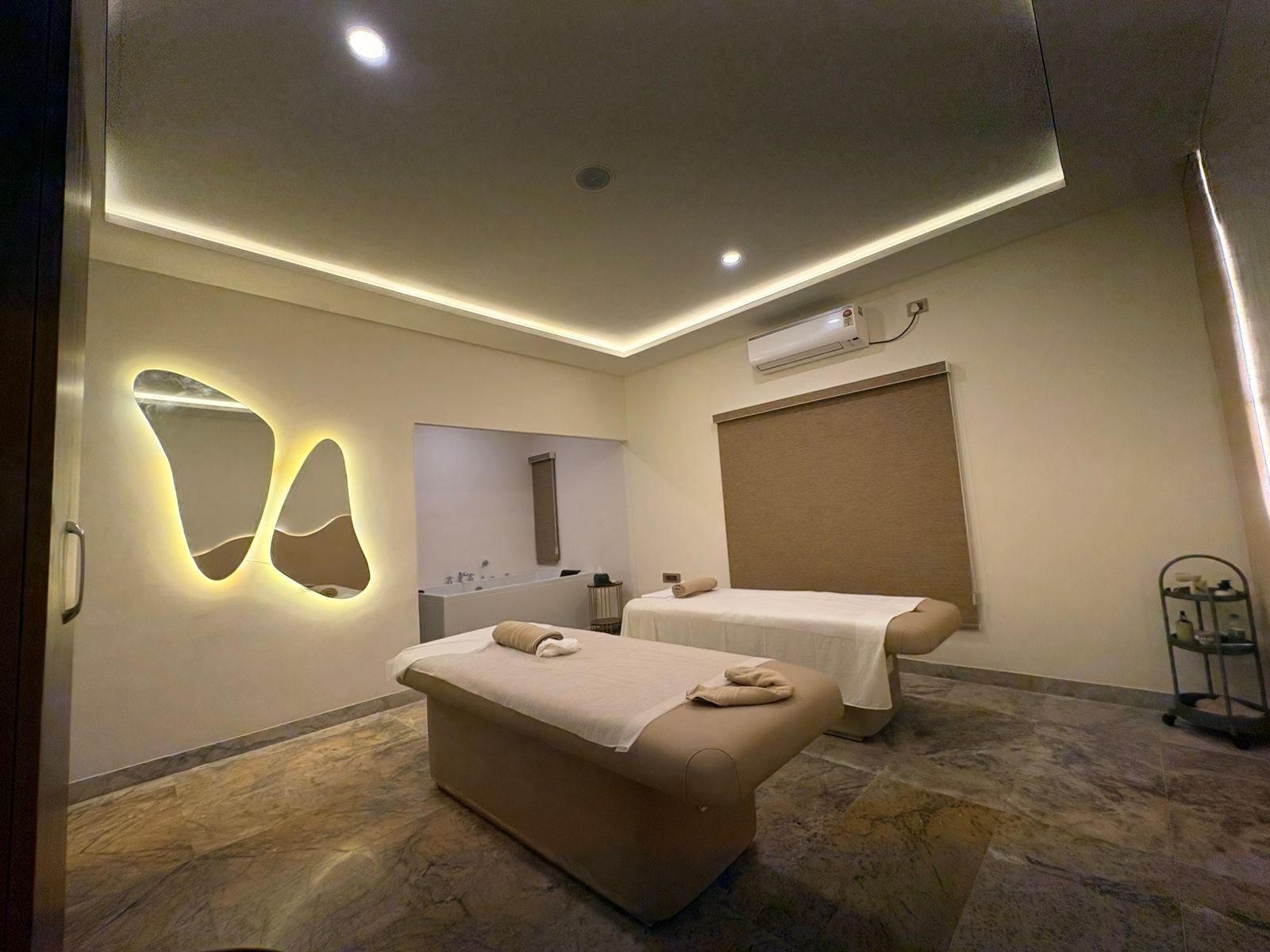
Why it feels so good
Stress lives in the body as much as the mind: shoulders that creep up, a jaw that clenches, shallow breathing. A massage works on all three at once. Long, slow strokes ask the muscles to let go, warmth and quiet ask your breathing to slow, and the hour itself is time nobody can ask anything of you.
Research on massage has found that people report lower stress and anxiety after a session, and many say they sleep better that night. It is not a cure for anything, and the calm fades if life stays hectic, which is why a rhythm of visits does more than a single long one.
Which massage for which kind of stress
- Wound up and restless: Aroma Harmony, with warm aromatic oils and gentle pressure.
- Tired and heavy: Swedish Serenity, long flowing strokes that leave you light rather than sore.
- Run down after a long stretch of work or travel: the Abhiyanga Ritual, an Ayurvedic massage in warm herbal oil.
- Stress that sits in your neck and shoulders as knots: Deep Body Restore, slower and firmer.
Getting the most from the hour
- Arrive ten minutes early, so you are not rushing into the room.
- Put your phone away in the locker, not on the table beside you.
- Tell your therapist what feels tight and how firm you like it, then let them lead.
- Book the evening if you can: an unhurried walk home and an early night carry the calm further.
Keep it going
A visit every three to four weeks keeps stress from building up again. If that is your rhythm, a membership lowers the price of each hour, and the hours can be shared with family.